THK – Linear Motion Product News

Linear guides turn to civil engineering

THK has launched a new range of linear guides that have been developed specifically for use in a wide range of civil engineering applications. The new products are designed to help engineers reduce build and maintenance costs, while improving system performance and safety. Typical uses include bridge stabilisation, earthquake protection, flexible stadia, or observation platforms.

In general, linear motion guides move or position loads.

This basic principle means they are extremely adaptable and have become a common component in many industrial systems where accuracy and reliability is key.

Now, new developments in technology mean that these simple yet highly efficient devices enable them to be easily incorporated into civil structures, giving architects and engineers new and potentially innovative options when designing or building structures.

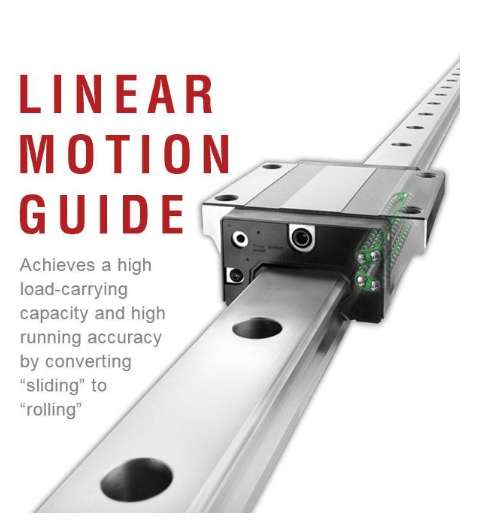
Tough as well as practical, linear motion guides are typically constructed of rails, or raceways, and guide blocks, or platforms, on which materials or components are transported.

Various techniques are used to support this mechanism although most contemporary systems use steel ball bearings housed within the block that run along a series of grooves in the rail.

As a result, linear motion guides can be installed on horizontal surfaces, vertical planes, inverted positions, slopes or walls.

The latest THK LM guides incorporate proven caged ball technology, which significantly extends the operating life of products and, perhaps as importantly, virtually eliminates friction, heat and noise.

As a result, systems supported or controlled by THK guides can be moved smoothly, accurately and with a minimum of motive force.

For example, the new JUP high capacity linear motion guide is capable of transporting extremely high loads of up to 780t – the equivalent of four unladen Boeing 747 jumbo jets – yet has a coefficient of friction that is less than 0.01.

In addition to long life and low operating costs, all THK products benefit from being virtually maintenance free – maintenance intervals are generally once every 10,000km of travel – allowing operating costs to be driven down even further without adversely affecting system performance or reliability.

THK linear motion guides are backed by full technical support and are available in a wide range of sizes to suit the variety of applications within civil engineering.

Cylindrical ball spline removes angular backlash

THK has introduced its latest LBS cylindrical ball spline, which is designed to eliminate angular backlash while providing high levels of rigidity and accuracy from a compact, rugged device. In addition, the latest LBS ball splines can transmit torque at high linear and rotational speeds, making them ideal for use in a wide range of applications including robotics, machine tool, palletising and materials handling systems, and can also be used to replace traditional parallel twin-shaft ball bushing mechanisms with a single, lower-cost unit. The LBS ball splines are manufactured from cold-drawn and precision ground steel, with three longitudinal ridges positioned equidistantly at 120 degree intervals around the diameter of the spline shaft.

The spline nut locates onto these ridges and incorporates THK’s proven circular arc ball-race technology, with two rolls of recirculating balls mounted in precision-machined raceways between each spline ridge.

The ball-race mechanism is designed so that the steel balls provide smooth, almost frictionless motion, with minimal heat, noise or wear.

In operation, one row in each of the three raceway units carries the torque loading in one direction of linear movement, with the second rows being used in the reverse direction to provide uniform displacement of load.

Perhaps as importantly, this configuration helps to minimise angular backlash in the direction of rotation, while backlash can be eliminated entirely by simply pre-loading the spline nut.

Due to the unique construction of the raceways pre-loading can be achieved without the need to twist the spline nut.

A further advantage of this configuration is a high degree of both rigidity and positional accuracy.

This is achieved through the close conformity circular arc contact within the raceway units, and the ability to pre-load the spline without initial deflection.

Additionally, the LBS ball splines can operate at speeds in excess of 150m/min for sustained periods.

LBS ball splines are also available with hollow shafts, for running piping, cabling or even laser beams in alignment systems, and in heavy-duty versions for use in applications where high levels of torque of up to 13,900Nm need to be transmitted or where overhung loads are carried.

Scrapers clear contamination from linear guides

THK has developed a scraper system for its renowned recirculating ball linear motion guides as an efficient and cost effective solution to the problem of dust contamination in the cutting mechanism of carpet looms. The source of the problem is the carpet itself; as it is cut, a very fine dust is produced which contaminates the track of the linear motion guides used to drive the cutting blades. As the dust builds up, it increasingly deteriorates the performance of the cutter.

To combat this problem, THK can now offer loom manufacturers its compact SRS-series guides together with the company’s new LaCS (laminated contact system) scrapers, Attached to the end seal lip of the guide, the LaCS scrapers feature a three-layer design and are permanently in contact with the rail, ensuring that dirt, dust, debris, oil and liquid are efficiently removed as the carriage moves.

The use of self-lubricating synthetic foam in the construction of the scrapers minimises friction, and ensures that their impact on the performance of the guides is negligible.

Used with conventional seals, the LaCS offer a first line of defence against carpet dust ingress, and provide a complete and effective solution to the cutter contamination problem.

This enables the SRS guides, mounted upside down in this application, to deliver the smooth precise motion and long periods of maintenance-free operation which are characteristic of THK’s linear motion guides that incorporate the company’s proven recirculating Caged Ball technology

Linear technology advances fitness equipment

THK has introduced its latest range of linear actuators and bushes for use in a wide range of contemporary fitness equipment. In particular, the new products have been designed to offer exceptionally high levels of positional accuracy and reliability, combined with heavy load bearing capacities and a long, maintenance-free working life from compact, lightweight units. Ideal for use in various workout machines, from chest and leg presses to bicep curl and seated calf raise equipment, through to treadmills, the latest range of products are capable of providing smooth and quiet movement, while the high performance linear actuators, size for size, are capable of transporting a far greater average dynamic load than competing devices and with an exceptional degree of accuracy and precision.

The compact and lightweight construction of these innovative linear actuators and bushes ensures that they are quick and easy to install.

THK’s KR15 ultra miniature actuator, for example, is one of the most compact models available, with a base to carriage height of only 15mm and a rail that is only 30mm wide.

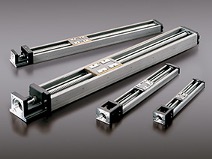
Yet, the unique construction of the actuator, which integrates an LM guide and ballscrew, creates a high rigidity unit that operates with the precision expected of perhaps larger models.

Specially developed to provide infinite linear motion, THK’s linear bushes perform linear motions with minimum frictional resistance, while offering precise and smooth movement.

Furthermore, THK’s latest models have been constructed using stainless steel, further protecting the rugged units from any potential damage caused by moisture, and ensuring excellent wear resistance.

How to specify linear motion guides – Part I

Linear motion guides are used throughout industry to move or position tools and workpieces, parts and assemblies, and complete machine systems and other large structures. linear guides can range in length from just a few centimeters to several meters, can move at speeds of over 5m per second and be positioned to levels of accuracy that can be better than 1m. Choosing the best linear guide for each specific application is not always a straightforward exercise as different manufacturers use various methods and materials of construction, and the range of specifications used, often with little commonality between suppliers, leads to further complexity.

In this series of articles we will describe the basic construction used in many types of linear motion guides and then move on to look at the key specification used, understand what they mean, and finally summarize the main technical and commercial issues that need to be considered when specifying, installing and operating these devices.

Linear motion guides are generally constructed of a profile rail over which a block or carriage runs.

This is designed to carry a workpiece or tool, and is supported by bearing rolling elements that allow it to operate smoothly with high levels of precision and repeatability.

Although the idea of using rolling element mechanisms has been used for thousands of years – for example, the builders of Stonehenge and the Pyramids moved large blocks of stone on timber rollers – the development of the modern linear guide can be traced back to 1944 when a round shaft linear bush guide was first manufactured in the USA.

This basic design gradually evolved through ball splines with straight-ridged shafts, to angular-contact ball splines with fixed shaft supports and then in 1973 to a profile rail linear guideway, with two-point circular arc contact, that forms the basis of today’s foremost linear guides.

In essence, a modern linear guide consists of a rail, carriage, balls, end caps and ball retainers, plus the associated seals and where appropriate lubrication and mounting mechanisms.

Operation is relatively simple, with the rail and carriage being separated by a caged series of steel balls.

These are generally mounted within raceways and enable the carriage to move smoothly along the rail, with the series of balls being circulated by return mechanisms in each end plate as the carriage moves.

The raceways are shaped using either gothic arch or circular arc structures.

Although the former provides higher individual rigidity with four contact points for each ball, rather than just the two of the circular arc, its construction leads to higher levels of differential slip, especially under heavier loads, which leads to greater friction, noise and heat and effectively impairs smooth, consistent and repeatable motion.

Gothic-arch raceways are generally used for miniature types of linear motion guides, where loads and frictional forces tend to be far lower.

For all other applications, the circular arc raceway is preferable, especially in a configuration where four raceways are used with each carriage, as this provides far greater load carrying capacity, is effectively self-adjusting and offers significantly higher levels of stiffness and reliability across the full operating range.

In addition to the shape of the raceways, one of the key factors for ensuring efficient operation is the design and construction of the ball mechanisms.

Traditionally these have been arranged without cage retention in a continuous loop through the raceway, with lubricating grease being used to minimize the noise and frictional effects of ball to ball contact.

This construction does, however, suffer from inherent drawbacks as no matter how much lubrication is applied there will still be relatively high levels of friction between balls and between the balls and the walls of each return hole.

This increases operating noise and heat and, perhaps more importantly, reduces smoothness, repeatability and operating life.

To overcome these problems the latest linear Caged Ball guides incorporate mechanisms that effectively seal each row of precision ground steel balls in a cage, where each ball is locked in with an independent pocket of grease.

This construction requires almost zero maintenance and, by eliminating ball to ball contact, produces an exceptionally low level of friction, allowing each linear guide to move smoothly, with minimal noise and heat and at extremely high speeds, often in excess of 300m per minute, with levels of positional accuracy that can be better than 1m.

In addition, reliability and operating life are dramatically improved, with many devices being capable of travelling the equivalent of more than 40,000km without maintenance or relubrication.

Modern linear guides have evolved to become extremely versatile, high precision devices that are used in applications ranging from electronic pick and place and semiconductor manufacturing, medical equipment and machine tools, heavy duty palletizing and handling, and even civil engineering to provide protection to buildings in earthquake zones.

Using linear motion guides effectively depends on a good understanding of how they work and of how to specify them correctly – a topic that can be fraught with difficulties, and which will be the subject of a subsequent article.

Reliable circular motion from guide assembly

Linear motion guides from THK continue to provide convenient and cost-effective solutions in a wide range of scientific and metrology applications. In a liquid crystal display (LCD) evaluation machine, which accurately measures how the optical characteristics of the LCDs vary with viewing angle, HCR-series circular guides are playing a key role by enabling very precise positioning of the sensor used to make the measurements. HCR guides, which use the same technology as THK’s linear guides, are supplied as a complete ready-to-install assembly, eliminating the need for the complex multi-component mechanisms often used to produce circular motion.

In this application, the rigidity of the HCR guides is a particular benefit in allowing the necessary levels of accuracy to be achieved, as is their freedom from differential slip.

The LCD evaluation machine also uses type RSR12 guides for X/Y positioning of the LCDs, which can be as large as 60in.

across the diagonal.

Even though the machine performs tests under modified climatic conditions, the accuracy and performance of the THK guides are unaffected.

The latest linear motion guides feature THK’s industry-leading Caged Ball technology, which completely eliminates ball-to-ball contact while ensuring effective lubricant retention.

The result is exceptionally low friction and minimal maintenance requirements.

THK type SSR20 linear guides were the choice for another machine which scans and measures 2D objects for quality control purposes and to generate CAD data automatically.

The low and constant dynamic friction of the guides, which are used for the X (scanning) axis, and their very low starting torque requirements were important benefits.

In the same machine, GL actuators are used for the Z-axis where longer travel, combined with fast motion, is required.

Since the GL actuators are part of an assembly that moves during the scanning process, their low mass and compact construction were also beneficial.

Linear motion guides keep optics on track

In the demanding worlds of optical engineering and instrument manufacture, the latest precision linear motion guides from THK not only enhance performance, but also cut costs and reduce maintenance requirements. As an example of the cost savings which can be achieved, the use of THK’s HCR circular guides in the altitude rotation mechanism of medium aperture astronomical telescopes has helped to cut the cost of the telescope mounting pedestal to just one tenth that of the previous design. This means that far more of the telescopes, which are extensively used for research in the infrared band, can be built.

The HCR guides used in the telescope drive eliminate the need for complex mechanisms to achieve smooth precise circular motion.

Delivered as complete assemblies, ready for immediate installation, they have equal load ratings in radial, reverse radial and lateral directions, allowing them to provide an effective solution in a wide variety of large diameter rotary applications.

In a very different application, miniature RSR series linear guides from THK are making it easy to change the lamps used as a light source in large planetarium projectors.

The optical assembly of these projectors is compact, so access to the lamps can only be gained by moving multiple lenses and mirrors out of the way.

Doing this manually would be time consuming, but the space to fit an automatic mechanism is very limited.

RSR microguides, which are available with rail widths of just 1mm, provided the solution and, because types with metal endplates were selected, the guides are easily capable of withstanding the high operating temperatures that result from their close proximity to the projector lamp.

At the heart of THK’s latest products is the company’s market-leading Caged Ball technology of re-circulating steel balls running in precision raceways, in an arrangement which eliminates ballon-ball contact and friction, as well as minimizing lubrication requirements.

THK guides find application not only in optical instruments, but also in the manufacture of the lenses used in those instruments.

Type SRG super roller guides are, for example, improving the surface finish of lenses produced in one of the latest CNC lens grinding machines.

This means that the lenses require less polishing, cutting production time and costs.

SRG guides combine THK’s caged ball technology with linear rollers, resulting in greatly increased radial and lateral stiffness compared with conventional roller guides, as well as smoother running and reduced variation of running resistance with changes in operating temperature.

All of these benefits were important for the lens grinding application, as was the very low maintenance requirement of the guides

Heavy duty guides aid the generation game

THK, the world’s largest dedicated developer and manufacturer of linear motion technology, has introduced its latest range of linear guides and ballscrews for use in a wide range of applications in the power generating and associated sectors. In particular, the latest products have been designed to offer exceptionally high levels of positional accuracy, combined with heavy load bearing capacities, fast operation and a long, maintenance-free working life in areas that include gantry and equipment movement systems, training simulators and ancillary equipment for fixed and mobile diesel generating sets. The latest range of products includes the HBN high-performance ballscrew that, size for size, is capable both of transporting over twice the average dynamic load of competing devices and of producing double the typical maximum nut speed (the DN value).

With a dynamic load capacity of up to 997kN and operating speeds of up to 130,000DN, the HBN is especially suitable for applications that demand high-speed precision movement of larger loads, such as the accurate positioning of robotics and automation equipment.

The HBN features THK’s proven Caged Ball technology together with a high-speed ball return system that eliminates ball-to-ball contact and ensures that all lubricants are retained; as a result, operation is smooth, silent and virtually maintenance free, minimizing frictional losses and helping to cut energy consumption by as much as 33%.

Also being introduced by THK are the latest SNR and SNS linear guides.

Both units incorporate Caged Ball technology, giving smooth, high speed and virtual maintenance free operation, with a high level of rigidity to allow exceptionally precise positioning to be achieved.

Indeed, so effective is the Caged Ball system that when compared with traditional devices rolling resistance is reduced by up to 90% and noise levels by more than 50%, with corresponding reductions in heat and friction.

Perhaps as importantly, the latest linear motion guides are capable of transporting exceptionally heavy loads, with the SNS in particular being rated up to 5530kN, are available in six heavy duty models and six ultra heavy duty models.

A range of accessories are available to further enhance the performance of the latest ballscrews and linear motion guides, including THK’s unique QZ lubrication system, that gives significantly extended maintenance intervals with reduced usage of lubricants, and contact scrapers for applications where an additional level of contamination control and protection is required.

Linear motion gear for making drive shafts

Ballscrews and linear motion products from THK are being used by automotive producers to make drive shafts in front wheel drive cars, vans and trucks. The ballscrews and linear guides are for use where, traditionally, hydraulic components were installed, and are providing cost savings and a higher degree of machine control. Constant velocity joints and jointed side-shafts used by vehicle manufacturers typically comprise two joints and a shaft that transfer steering, suspension and variable torque to the driven wheels of a vehicle, while reducing noise, vibration and harshness.

The drive shaft manufacturing cell can be based around four purpose built machines, each of which carries out part of the assembly.

First, a journal press assembles the drive shaft and universal drive joint that connects the shaft to the driven wheel and suspension components.

The second stage is to add a rubber boot, secured with a crimped band, to protect the joint in use.

This is followed by two operations to add a double offset joint on the inboard end of the shaft, with the joint effectively letting the shaft move inwards and outwards as the suspension unit oscillates.

Throughout, the splined joints and shaft must be located precisely to ensure consistent long term operation, for low wear and vehicle safety.

The manufacturing cell replaces a largely manual operation by developing production systems that allow automation of an essentially complex process.

HBN ballscrews, driven by servo motors, and SHS caged ball linear guides are used to control precisely the vertical positioning and alignment of each tool head and workpiece.

Control is especially important on the system that locates and then locks the splined shafts and joints together and then, while the two components are still clamped, exerts a retraction force to check they are fully engaged.

The pull force is always greater than that required to engage the parts, while the first stage in the process needs a gentle oscillating motion to ensure the splines locate correctly.

The ballscrews and linear guides let the machine achieve positional accuracy, high speed acceleration and deceleration, and precise positive and negative pressure.

To learn more please contact Technico, Inc.

Low-cost actuators target domestic market

THK, the leading global designer, developer and manufacturer of linear motion solutions, has launched the CRES, a new high-performance low-cost rod actuator, that has been produced to meet the growing demand for automation within homes and offices. Available as high speed or high power versions, CRES200 and CRES500, the new actuators combine exceptional levels of rigidity, accuracy and reliability in a lightweight, easy to install, zero maintenance unit. With a compact construction, all components, including the actuator mechanism, motor drive and sensors to control position and speed of actuator rod, are integrated into the body of the unit, making the CRES suitable for almost any consumer application where there is a need for automation.

In particular, CRES is ideal for medical lifting aids, the automatic opening and closing of windows or skylights and the automatic control of blinds.

Paying particular attention to aesthetics, CRES has a slim line, smooth design, free of awkward lines or sharp edges, resulting in a sophisticated, minimalist and stylish unit.

Furthermore, the design features an integrated gear case function allowing for the best cost and performance to be realized.

The unit is also dust-proof and splash-proof meeting IP55 standards.

CRES200 has a rated speed of 55mm/s and a rated thrust of 196N, whereas the CRES500 version has a rated speed of 15mm/s and a rated thrust of 490N.

In addition, each model is available in stroke lengths of 50, 100 and 130mm.