
Medical robotics is a somewhat new field. The first robot-assisted surgical procedure occurred in 1985, and 15 years later the da Vinci Surgical System was the first robotic system approved by the U.S. FDA for general laparoscopic surgery. The market for surgical robots and other medical robots has increased considerably, with total global sales of about $4.2 billion in 2015.
Continuing technological advancements, an older population, and climbing labor costs are among the reasons driving the demand for robotically assisted surgical devices and other robotic systems that automate medical processes and improve the patient experience. As such, robotic surgery is poised for growth, as minimally invasive surgical (MIS) procedures can decrease hospital stays, lessen recovery times and minimize discomfort and complications for patients, all while giving surgeons increased precision, flexibility, and control to safely perform complex procedures. Overall, the global market for medical robots is expected to increase to $11.4 billion by 2020, proceeding at an annual growth rate of 22.2%. Global demand for surgical robotic systems alone could hit $6.4 billion by 2020, growing at 10.2%. While robotically assisted surgery is the largest area of application for medical robots, analysts expect emerging applications, such as motion-assisting robotic exoskeletons and medication-delivery robots to increase in the coming years as well.
Manufacturers and researchers are using THK technology and expertise to implement solutions that satisfy the growing demand for medical robots. THK is uniquely positioned with an array of components that enable miniaturization, dexterity, and precision in medical robots while meeting strict regulatory and industry standards for quality, reliability, and safety. Below are some of the ways THK is helping to shape the future of this emerging field.
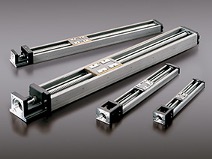
THK’s mix of miniature splines, ball screws, cross rollers, guides, actuators, and mechatronics plays a key role in developing the next cycle of advanced medical robots. For such, manufacturers and designers are deploying THK Micro Cross-Roller Ring called the RAU series, as a cost-effective alternative to conventional angular contact ball bearings. One cross-roller ring provides more rigidity, high rotational accuracy, improved safety factor, higher load capacity, and a smaller compact footprint than a double-row angular contact ball bearing. This allows manufacturers to produce smaller, lighter robots while reducing their machining cost and components and simplifying purchase. Because of the one-piece design structure, some models come with inner and outer mounting holes, reducing manufacturing cost and assembly time. Also, THK’s host of electromechanical actuators incorporate several THK components that can further improve machine design, reduce the number of assembly parts, reduce design time and reduce overall cost.
In the health care field, manufacturers of medical robots must incorporate additional requirements and design considerations. They achieve the dual need of offering dexterity, accuracy, and precision, while also meeting stringent standards for quality, reliability, and safety. Leading manufacturers of medical robots count on THK quality. THK quality helps the medical robotic industry to meet and exceed market demands.
THK is working with universities and other organizations to accelerate technology that could significantly improve the future of health care - robotic telesurgery. Robotic telesurgery enables a surgeon to operate on a patient who is not in the same location, allowing people to access world-leading expertise and better health care without having to travel. While the physician operates the controls at his or her location, a robotic arm installed in the remote operating room moves in response to commands received over an internet connection. Long-distance robotic surgery holds the promise of making high-quality medical care available to more people - for example, soldiers who’ve been wounded on the battlefield, or patients residing in less populated areas that don’t have access to state-of-the-art medical equipment. “The telesurgery robot is a revolutionary system that not only reduces the patient’s trauma but also lightens the burden on the surgeon,” explains Mamoru Mitsuishi, a medical-robotics professor at the University of Tokyo Department of Bioengineering. “It offers many advantages, not the least of which will be helping to correct regional disparities in medical care and provide appropriate initial treatment in medical emergencies.”
THK has played a leading role in the development of telesurgery robots, designing and manufacturing the robotic arms, and the arm sections of the forceps. THK actuators and linear-motion guides are being used in assorted mechanisms required to reproduce the movements of the surgeon and maintain patient safety during the procedure. Mitsubishi, who had been familiar with THK’s “considerable technical capabilities” due to his prior research in the field of intelligent machine tools, notes that the development of telesurgery robots poses special challenges compared to machine tools.
“For instance, the requirements of reduced size and weight are different,” Mitsuishi says. “Surgery is a race against time. Not only do the movements have to be more precise, but the robotic arm must react quickly, and must be designed for quick installation and replacement. Another issue is cleaning and sterilization. THK took all of our demands very seriously.”
Encompassing its mission of developing innovative products and accelerating trends that support a higher quality of life, THK is playing a significant role in starting the next generation of medical robots. With components and systems that reduce the size and cost of robots, while enabling accuracy, precision, reliability, and safety, THK is helping bring the next generation of advanced medical robots from drawing board to reality.
THK is a leading pioneer of Linear Motion Systems. Today, the LM Guide is a component of mechanical and electronic systems in a wide variety of industries. The versatility of THK products and their wide use across applications have made them an industry leader with sales upward of $2.6 Billion per year.