We use cookies to make your experience better. To comply with the new e-Privacy directive, we need to ask for your consent to set the cookies. Learn more

Glossary
At Technico, we are proud to offer an extensive variety of THK products, in addition to services related to these THK products. Our goal is to offer the highest quality motion control products at the lowest possible prices. We want to help you find the THK products you need for whatever project you may be working on, which is why we provide THK resources to complement the products we sell.
Absolute Move: A move referenced from a fixed absolute zero position.
Acceleration: The change in velocity as a function of time, going from a lower speed to a higher speed.
Accuracy: An absolute measurement defining the difference between expected and actual position.
Acme Screw: A leadscrew which uses a threaded screw design with sliding surfaces between the screw and nut.
Actuator (Electric Cylinder): A self contained leadscrew system which converts rotary motion (from a motor) to linear motion.
ASCII (American Standard Code for Information Interchange): A code which assigns a number to each numeral and letter of the alphabet. This allows information to be transmitted between machines as a series of binary numbers.
Backdrive: Tendency of a cylinder to creep out of its set position due to an applied load or force.
Backlash: The amount of play (lost motion) between a set of moveable parts when changing the direction of travel. Typically seen in drive trains, leadscrews, & bearings.
Ball Screw: A leadscrew which uses a ball nut of recirculating steel balls which roll between the nut and screw.
Baud Rate: The number of binary bits transmitted per second on a serial communication link such as RS232C.
BCD (Binary Coded Decimal): A binary numbering system in which the decimal digits 0 to 9 are represented by a 4 bit binary number.
Binary: Numbering system in which the base is two, each number being expressed in the powers of two, by 0 or 1.
Bearing: A support device which allows a smooth, low friction motion between two surfaces loaded against each other.
Bushing: A cylindrical metal sleeve inserted into a machine part to reduce friction between moving parts.
Closed Loop: A positioning system which employs feedback information to regulate the output response.
Cogging: Motor torque variationswhich occur at low speeds due to a weak magnetic field.
Critical Speed: Rotational speed of a leadscrew at which vibrations (whipping) will occur.
Current: The flow of charge through a conductor.
Cycle: One complete extension and retraction of a cylinder.
Deceleration: The change in velocity as a function of time, going from a higher speed to a lower speed.
Drive Ratio: The ratio of motor revolutions per leadscrew revolution.
Drive Train: The arrangement by which the motor is coupled to the leadscrew.Typically provided by gears, timing belt/pulley or direct coupling.
Duty Cycle: The ratio of Motor on time and total cycle time within a given cycle of operation.
Duty Motor ON Time (%) = X 100% Cycle Total Cycle Time
Dwell Time: Time within a move cycle where no motion occurs.
EEPROM (Electrically Erasable Programmable Read Only Memory): Non-volatile data storage chip.
Efficiency: Ratio of output power vs. input power.
EMI (Electromagnetic Interference): Electrical disturbances which interfere with proper transmission of electrical signals, also known as "electrical noise."
Encoder: An electromechanical device which produces discrete electrical pulses directly related to the angular position of the input shaft, providing high resolution feedback data on position, velocity, and direction.
Force: The action of one body on another which tends to change the state of motion of that body. Typically described in terms of magnitude, direction, and point of application.
Friction: The resistance to motion of two surfaces that touch.
Helical Gear: Gears with teeth that spiral around the gear.
Incremental Move: A move referenced from the current set position.
Inertia: Property of an object that resists a change in motion. It is dependent on the mass and shape of the object. The greater an object’s mass, the greater its inertia, and the more force is necessary to accelerate and decelerate.
Lead: The linear distance a nut on a leadscrew will travel with one revolution of the leadscrew.
Leadscrew: Device which converts rotary motion to linear motion.
Mass: The quantity of matter that an object contains.
Microprocessor: A device that incorporates many or all functions of a computer in a single integrated circuit. Used to perform calculations and logic required to do motion or process control.
Moment (Load): Rotational forces applied to a linear axis, typically expressed as yaw, pitch, and roll.
Motion Profile: A method of describing a move operation in terms of time, position, and velocity. Typically velocity is characterized as a function of time or distance which results in a triangular or trapezoidal profile.
Motor: A device which converts electrical energy into mechanical energy.
Non-Volatile Memory: Memory that does not lose information on loss of power.
Open Collector (NPN): An output signal which is provided by a transistorwhere the “open collector output” acts like a switch closure to ground when activated.
Open Loop: A positioning system which does not employ feedback information.
Optically Coupled: An interface circuit that transmits a signal with no direct electrical connection except for the logic ground.
Optical Isolation: An interface circuit that transmits a signal with no direct electrical connection.
Overshoot: The amount by which a parameter being controlled exceeds the desired value. Typically referring to velocity or position in servo systems.
PID (Proportional, Integral, and Derivative): Refers to a group of gain parameters used for tuning or optimizing the response of a closed loop positioning system.
Pitch: The number of revolutions a leadscrew must turn for the nut to travel one inch (single start only).
PLC (Programmable Logic Controller): A programmable device which utilizes “ladder” logic to control a bank of inputs and outputs which are interfaced to external devices.
Power: How much work is done in a specific amount of time.
PWM (Pulse Width Modulation): A type of adjustable frequency drive output where the drive’s output voltage is always a constant amplitude and by “chopping” (pulse width modulating) the average output power is controlled.
RAM (Random Access Memory): A memory chip that can be read from and written to. Used as a medium for temporary information storage. Data is lost after power loss.
Repeatability: The ability of a positioning system to return to an exact location during operation (from the same direction with the same load and speed).
Resistance: The opposition to the flow of charge through a conductor.
Resolution: The smallest positioning increment achievable. In digitally programmed systems it is the smallest specifiable positioning increment.
Resonance: Oscillatory behavior in a mechanical body when operated or subjected to a periodic force occurring at its natural frequency.
ROM (Read Only Memory): A memory chip that can be read but not altered.
RS232C: A method of Serial Communication where data is encoded and transmitted on a single line in a sequential time format.
Servo Motor: A motor which is used in closed-loop systems where feedback is used to control motor velocity, position, or torque.
Spur Gear: Gears with teeth straight and parallel to the axis of rotation.
Stepper Motor: Motor which translates electrical pulses into precise mechanical movements. Through appropriate drive circuitry, controlling the rate and quantity of pulses will control the motor’s velocity and position.
Thrust: The measurement of linear force.
Torque: A measure of angular force which produces rotational motion.
TTL (Transistor-Transistor-Logic): Refers to a family of integrated circuit devices used for control. Typically use voltage levels from 5-12 VDC.
Velocity (Speed): The change in position as a function of time.
Voltage: Difference in electrical potential between two points.
Weight: Force of gravity acting on a body. Determined by multiplying the mass of the object by the acceleration due to gravity.
Contact Sales Support
GET IN TOUCH TODAYRequest A Quote
GET STARTED TODAYLatest Blog Posts
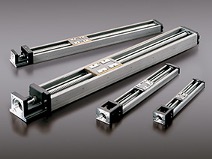
THK KR & GL Linear Actuators — $398 Each
Brand-new overstock THK actuators available now at one fixed clearance price, regardless of model or stroke length.
READ MORE
Streamlining Your Automation: Get More from Technico’s Expertise
In industrial automation, precision isn’t a “nice to have” — it’s the foundation of performance, reliability, and uptime. Whether you’re designing a medical device, retrofitting an existing system, or optimizing a high-speed packaging line, the components you choose directly impact your results.
READ MORE